

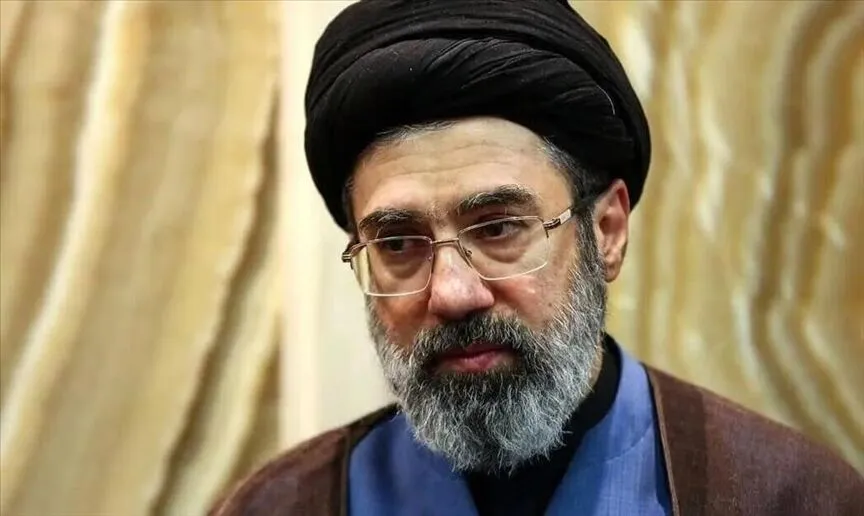
Mojtaba Khamenei and the Making of a New Political Era
Mojtaba Khamenei has emerged from years of political obscurity to become one of the most consequential figures in modern Iran. Born in Mashhad in 1969, he spent much of his career away from conventional public politics, developing influence through religious education, the office of his father Ali Khamenei, and relationships with powerful security institutions. In March 2026, Iran’s Assembly of Experts selected him as the country’s third supreme leader after his father’s death. His ascent transformed a previously shadowy political career into a position with enormous national and regional consequences.
From Mashhad to the Corridors of Power
His early life unfolded alongside the transformation of Iran itself. Raised in a politically prominent clerical family, he experienced the revolutionary period not simply as history but as the environment in which his family’s identity and influence were formed. After secondary education, he studied Islamic theology before entering the Qom seminary tradition. He also served with Iran’s military forces during the final years of the Iran-Iraq War. These experiences helped connect religious scholarship with the security and political networks that would later become central to his career.
A Profile of the Man Behind the Name
| Aspect | Overview |
|---|---|
| Full name | Mojtaba Hosseini Khamenei |
| Born | September 8, 1969 |
| Birthplace | Mashhad, Iran |
| Profession | Cleric and political leader |
| Religious education | Qom seminary |
| Previous influence | Office of the Supreme Leader and security networks |
| Current position | Supreme Leader of Iran |
| Political image | Conservative and security-oriented |
| Public profile | Historically private and rarely interviewed |
Unlike politicians who build their careers through elections, speeches and television appearances, his influence developed largely behind institutional doors. Reports have described him as an important figure around his father’s office, while his formal government résumé remained limited. That contrast became central to his public image: a man with substantial reported influence but little conventional visibility. The United States sanctioned him in 2019, alleging that he represented his father in an official capacity and worked with security and military-linked networks.
The Power of Staying Out of Sight
For years, his relative invisibility created an unusual kind of political mythology. Supporters and opponents alike interpreted the absence of public speeches and interviews as evidence of a personality shaped by discretion and internal influence rather than mass politics. His position around the supreme leader’s office gave him access to an environment where decisions could carry consequences without necessarily becoming public. Consequently, discussions about his future often focused less on charismatic leadership and more on networks, institutions, loyalty and the balance between Iran’s clerical establishment and security apparatus.
Why His Succession Was So Significant
The decision to choose the younger Khamenei represented a remarkable moment for the Islamic Republic. Constitutionally, the supreme leader is selected by the Assembly of Experts, meaning the succession was formally presented as an institutional decision rather than an automatic inheritance. Nevertheless, the fact that the chosen leader was the son of the previous supreme leader inevitably created debate about dynastic politics. Iran’s 1979 revolution had abolished monarchy, making hereditary succession particularly sensitive. His elevation therefore carries symbolic implications extending well beyond one individual.
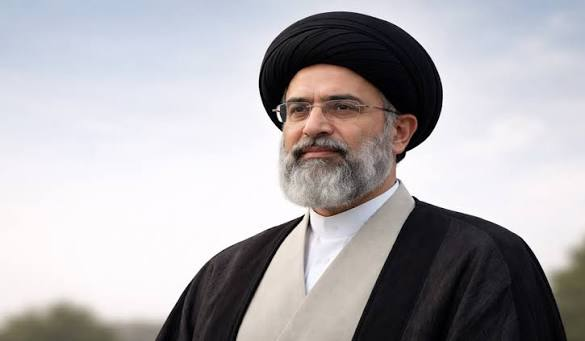
A Leadership Defined by Security and Continuity
His political arrival also occurred during an extraordinary national crisis. His father was killed during the opening phase of the 2026 conflict involving Iran, Israel and the United States, after which the younger Khamenei was selected as successor. Rather than beginning his tenure in a period of calm political transition, he inherited a system facing war, economic pressure, regional tensions and questions about internal stability. Consequently, his early leadership has been closely associated with continuity, security and resistance rather than an immediate departure from the ideological foundations of the Islamic Republic.
The Human Dimension Behind a Political Dynasty
Political biographies can sometimes make powerful figures appear almost entirely institutional, yet family history remains important in understanding this succession. Mojtaba spent decades living in the shadow of an exceptionally powerful father whose leadership shaped Iran for more than three decades. His rise therefore carries an unusual psychological dimension: the son became responsible for occupying an office that had defined his family’s public identity for much of his life. At the same time, the circumstances surrounding his accession turned private family history into an international political story almost overnight.
The Question of Public Visibility
Perhaps the most striking feature of his early tenure has been his limited public visibility. By late August 2026, reports said he had not made a conventional public appearance for months after being injured during the initial attacks that killed his father. Iranian officials have maintained that he remains engaged in governing, while his absence has generated speculation and uncertainty. Reuters reported that major institutions, including the Revolutionary Guards and the Supreme National Security Council, have continued operating during this period, illustrating how Iran’s political system can function through multiple centers of authority.
Iran’s Leadership Beyond One Individual
The evolving political landscape also demonstrates why understanding Iran requires looking beyond the supreme leader alone. The presidency, parliament, clerical institutions, Revolutionary Guards and security bodies each occupy different parts of the political structure. Recent developments have included changes within the Supreme National Security Council, including the appointment of former Revolutionary Guards commander Mohsen Rezaei as secretary. Such appointments suggest that the security establishment remains central to national decision-making, particularly while Iran faces military pressure and an uncertain diplomatic environment.
A Harder Political Image
Observers have frequently characterized the new leadership as firmly conservative. His previous connections to Iran’s security establishment and the continued prominence of hard-line figures have encouraged interpretations that his administration will emphasize ideological loyalty and internal control. In August 2026, reports also highlighted the renewed prominence of Hossein Taeb, a hard-line cleric appointed to lead the Basij. Meanwhile, the leadership has continued emphasizing resistance to external pressure. These developments point toward continuity with Iran’s established political-security model rather than a dramatic ideological transformation.
Regional Consequences of His Rise
The significance of his leadership does not stop at Iran’s borders. Tehran’s relationships with Gulf states, Israel, the United States and other regional actors remain closely tied to the supreme leader’s strategic direction. In August, he issued a written message urging Gulf rulers to confront what he described as a common enemy and called for greater unity among Muslim countries. Such statements indicate that regional confrontation and ideological messaging remain important elements of Iran’s foreign-policy posture during his leadership.
Why His Story Matters Beyond Politics
The fascination surrounding this figure ultimately reflects a larger question about how political power survives periods of profound disruption. Iran’s system has endured revolution, war, sanctions, protests, leadership transitions and intense international pressure. His succession demonstrates the strength of institutional continuity, but it also exposes tensions surrounding legitimacy, succession and public confidence. For international observers, his story is therefore not simply a biography of one cleric. It is a window into how an established political system attempts to reproduce itself while facing an unusually turbulent historical moment.
The Meaning of a Quiet Leader
Mojtaba Khamenei represents an unusual form of political leadership: powerful yet historically private, religiously educated yet deeply connected to security institutions, and suddenly elevated to international prominence after years of limited public exposure. His future will depend not only on his personal authority but also on the institutions surrounding him, from the clerical establishment to the military and security services. Ultimately, his tenure will be judged by whether he can turn inherited influence into durable authority. That question makes his rise one of the defining political stories of contemporary Iran.
