

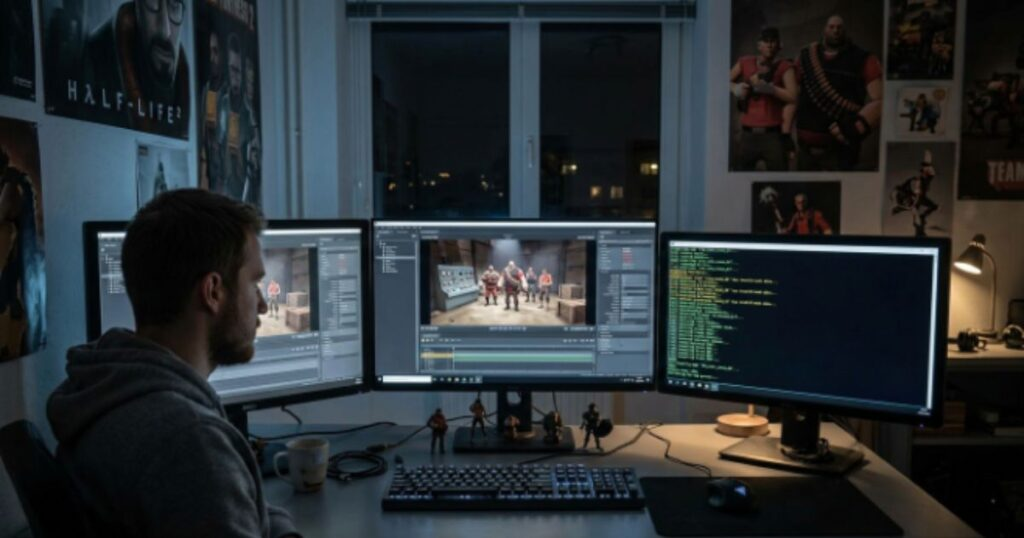
sfm compile: Behind the Technical Language of Digital Animation
sfm compile may sound like a narrow technical phrase, but within the world of Source Filmmaker, it represents something larger: the bridge between a creator’s imagination and a finished digital asset. Source Filmmaker, developed by Valve and released in 2012, was designed as a movie-making environment built around the Source engine. It allows creators to work with characters, environments, lighting, cameras, animation, and game assets in a cinematic setting.
For newcomers, however, the language surrounding SFM can feel intimidating. Terms such as models, QC files, SMD files, MDL files, materials, rendering, and compilation appear quickly. Consequently, understanding sfm compile is not simply about learning one button or command. It means understanding how digital creative work moves from an editable source into a format that the Source engine can actually recognize.
Where Compilation Fits Into the Source Filmmaker Creative Process
Source Filmmaker occupies an unusual place in digital culture. It was created as a professional-style filmmaking tool for working with Source-engine assets, yet it became accessible to a much broader community of independent animators, machinima creators, artists, and hobbyists. Valve describes SFM as a movie-making tool built inside the Source game engine, emphasizing its ability to let storytellers iterate while seeing their work in context.
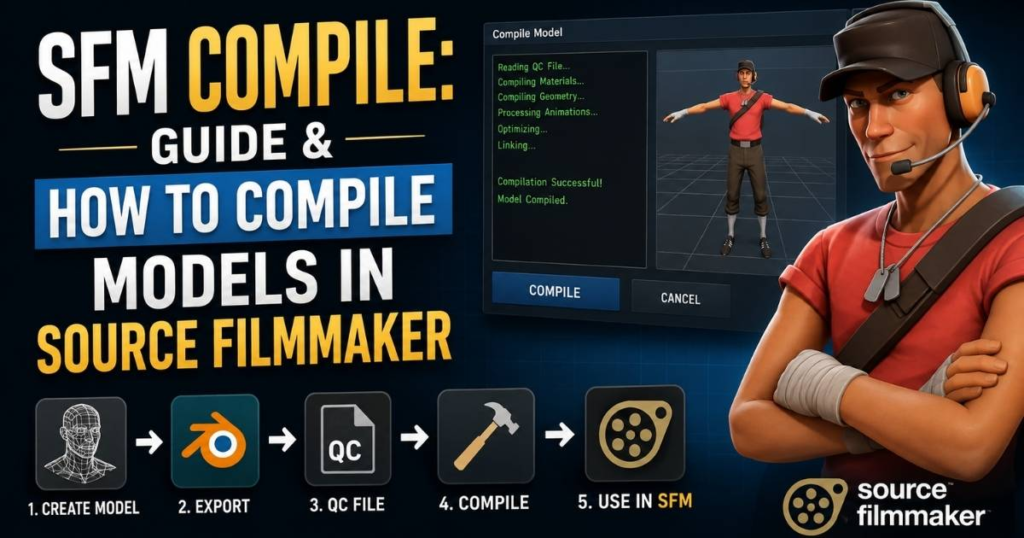
That creative freedom depends on a technical foundation. A model created or exported through another 3D workflow may not automatically be usable by the Source engine. This is where sfm compile becomes important. In the traditional Source pipeline, StudioMDL is the command-line tool responsible for converting intermediate model formats into the binary MDL format read by the engine.
In other words, compilation is a form of translation. The artist thinks in terms of characters, movement, shape, materials, and atmosphere, while the engine needs carefully structured data. The compiler sits between those two worlds.
From 3D Asset to Source-Ready Model
The technical journey behind sfm compile is easier to understand when viewed as a chain rather than a single action. A creator might begin with a model, rig, animation, or other asset produced in a 3D application. That asset then has to be prepared in formats and structures compatible with the Source ecosystem.
A QC file is particularly important because it provides instructions for the model compilation process. It can specify information such as the model name, body geometry, materials, animations, and other properties. StudioMDL then processes those instructions and creates the compiled model files required by the engine. Valve’s documentation identifies StudioMDL specifically as the tool used to compile models into the binary MDL format.
For beginners, this can initially seem like unnecessary complexity. Yet there is a creative logic behind it. The compilation stage establishes the rules by which an asset behaves inside the engine. A model is not merely an image; it is a structured object with geometry, materials, bones, animations, and other relationships.
Why Small Technical Errors Can Have Big Visual Consequences
One reason sfm compile has become such a recognizable phrase among creators is that technical mistakes often appear as obvious visual problems. A missing material, incorrect path, unsuitable model structure, or problematic animation can turn an otherwise polished asset into something that refuses to behave correctly.
That relationship between technical precision and visual quality is one of the most interesting aspects of SFM culture. A creator might spend hours designing a character, adjusting poses, positioning lights, and constructing a cinematic shot. Nevertheless, one incorrect instruction in the asset pipeline can undermine the result.
Therefore, compilation is not merely an administrative stage. It is part of the craft. The more creators understand what happens during compilation, the more effectively they can diagnose problems before those problems spread into a larger project.
The Tools Behind the Process
The Source ecosystem has traditionally relied on a collection of specialized tools rather than one universal production application. StudioMDL remains central to model compilation, while other Source development tools handle different aspects of asset preparation and inspection. Valve’s Source Filmmaker documentation lists StudioMDL among the model compilers and identifies additional tools for models, textures, maps, and other production tasks.
This modular approach can appear old-fashioned compared with contemporary creative software, where many processes are hidden behind integrated interfaces. However, it also gives experienced creators considerable control. When something goes wrong, the underlying files and compilation instructions can be examined rather than treated as an invisible black box.
That transparency has helped preserve a culture of experimentation. Creators can learn by changing a parameter, recompiling an asset, observing the result, and trying again. Consequently, technical knowledge becomes part of artistic development.
sfm compile and the Culture of Independent Animation
The importance of sfm compile is also cultural. Source Filmmaker became more than a piece of software because communities developed around the possibilities it offered. Machinima, fan animation, short-form storytelling, posters, comedic scenes, dramatic sequences, and experimental visual work all found space within the SFM ecosystem.
This matters because the software lowers a particular barrier between game assets and filmmaking. Instead of constructing every environment and character from scratch, creators can work with assets already associated with familiar digital worlds. Valve’s description of SFM highlights this connection, noting that the tool uses the same assets as the games.
As a result, sfm compile sits quietly beneath a much more visible creative culture. Viewers may notice the final animation, the camera movement, or the lighting. They rarely think about the compilation process that helped make those elements possible.
A Useful Distinction: Compilation Is Not Always the Same as Rendering
One source of confusion is the way the phrase sfm compile is used online. In strict technical terms, compiling a model means converting source or intermediate model data into a format that the Source engine can read. StudioMDL is explicitly documented for this purpose.
However, community discussions sometimes use “compile” more loosely when talking about producing a final animation, rendering an image sequence, or preparing a finished video. These are related stages of the broader production workflow, but they should not automatically be treated as identical.
Understanding the distinction helps newcomers avoid searching for a single universal “compile” button. Instead, they can ask a more useful question: What exactly am I trying to compile or export? A model, map, texture, animation, or final movie may require different processes.
What Makes the Workflow Valuable for Beginners
At first glance, the technical side of sfm compile can feel like an obstacle. However, learning the basic pipeline often changes the experience. Instead of treating errors as mysterious failures, creators can begin interpreting them as clues.
For example, an asset that does not load correctly may lead the creator to inspect file paths, material definitions, model structure, or compilation instructions. Consequently, every failed attempt can become a small lesson in how the Source engine organizes information.
This is particularly valuable in an era when many creative applications emphasize automation. Automation is convenient, of course, but understanding what happens underneath can make an artist more adaptable. SFM’s somewhat hands-on workflow encourages that relationship between creative intuition and technical literacy.
The Human Side of a Technical Workflow
There is an overlooked human dimension to sfm compile. Behind every compilation log is someone trying to make an idea work.
Perhaps it is a beginner attempting to import a first custom character. Perhaps it is an animator building a short film late at night. Or perhaps it is an experienced creator troubleshooting a familiar error after years of working with the Source engine. In each case, the technical process is connected to a personal creative goal.
That is why the best way to understand compilation is not simply as file conversion. It is better understood as part of the negotiation between imagination and technology. The artist imagines the scene; the software establishes the rules; the creator learns how to make the two cooperate.
A Compact View of the SFM Pipeline
| Stage | Main Purpose | Creative Importance |
|---|---|---|
| Asset creation | Build models, animations or other content | Establishes the visual idea |
| Preparation | Organize geometry, materials, rigs and files | Makes the asset compatible |
| QC configuration | Provide compilation instructions | Defines how the asset is interpreted |
| Compilation | Convert source data into engine-readable formats | Connects the asset to Source |
| Testing | Check the result inside the workflow | Reveals technical or visual problems |
| Animation and presentation | Build the final scene or sequence | Turns the asset into storytelling |
The table illustrates an important point: sfm compile is one stage within a larger creative chain. It is significant, but it does not replace modeling, animation, lighting, directing, or storytelling.
Why the Process Still Matters in a Changing Digital Landscape
Digital filmmaking has changed dramatically since Source Filmmaker appeared. Modern engines increasingly emphasize real-time rendering, integrated asset pipelines, procedural workflows, and automated tools. Nevertheless, SFM continues to have a recognizable identity because its limitations are also part of its character.
The software’s longevity is particularly interesting. Valve released Source Filmmaker in 2012, yet its underlying creative philosophy remains relevant to communities that value direct control over scenes and assets.
In that context, sfm compile represents more than an old technical procedure. It reflects a particular generation of digital creation in which artists frequently had to understand the machinery behind their work. The result was sometimes frustrating, but it also produced a culture of experimentation and shared problem-solving.
The Lasting Appeal of Learning What Happens Under the Hood
Ultimately, the value of sfm compile lies in what it teaches about digital creativity. Modern tools can make complex production look effortless, but every polished visual still depends on systems operating underneath the surface.
Learning those systems does not make an artist less creative. Instead, it can provide greater independence. Once creators understand how models, materials, scripts, and engine-readable files interact, they gain more freedom to experiment.
That may be the enduring lesson of Source Filmmaker. Its appeal has never been only about pressing buttons and producing images. It is about building an understanding of how digital worlds are assembled, controlled, and transformed into stories.
Frequently Asked Questions
What does sfm compile mean?
In its technical sense, sfm compile refers to the process of preparing and converting Source-compatible assets, particularly models, into formats that the Source engine can read. StudioMDL is the core Valve tool documented for compiling models into MDL format.
Is compilation the same as rendering in SFM?
Not necessarily. Model compilation and final rendering are different stages. However, people sometimes use the word “compile” informally when discussing the broader process of producing finished SFM content.
Why are QC files important?
QC files provide instructions to the model compiler. They help define information such as model structure, materials, animations, and other compilation settings.
Is sfm compile only useful for experienced creators?
No. Beginners can benefit significantly from learning the basics because understanding the pipeline makes common errors easier to diagnose and reduces dependence on trial and error.
Conclusion: Where Technology Meets Storytelling
sfm compile may begin with file formats, commands, and technical instructions, but its real significance is creative. It is one of the mechanisms that allows a digital asset to move from an artist’s workspace into a functioning Source-engine environment.
More importantly, the process reveals something enduring about digital filmmaking: the final image is only the visible surface of a much deeper system. Beneath a character’s movement, a carefully framed shot, or an atmospheric scene are countless technical decisions that make the creative result possible.
Source Filmmaker remains interesting precisely because it exposes some of those decisions. Its workflow asks creators not only to imagine worlds but also to understand the machinery that brings those worlds to life. In that sense, sfm compile is not merely a technical term. It is a reminder that, in digital art, creativity and technical knowledge have always been closely connected.
